Why Your Smartwatch’s Stress Score Is Mostly Guessing

Maya Chen
March 7, 2026
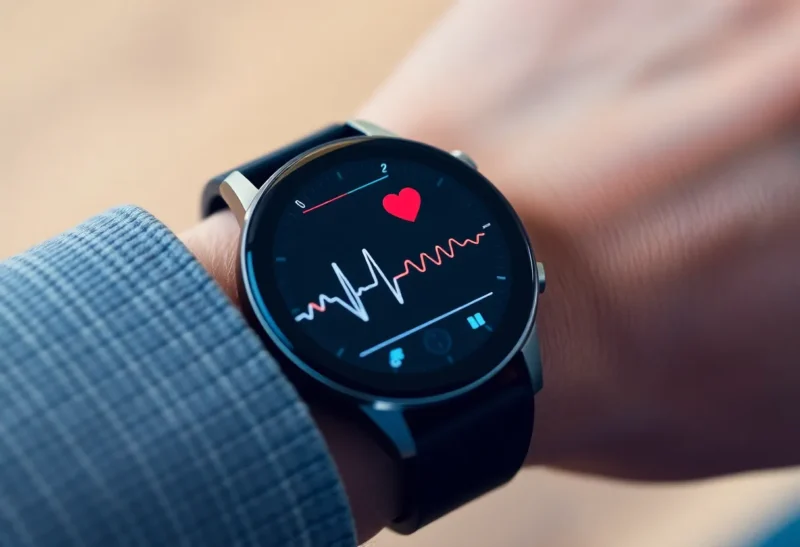
Your smartwatch says you’re stressed. A number, a color, a bar. Maybe it suggests a breathing exercise. But what is it actually measuring? The honest answer: not stress itself, but a proxy—and a noisy one at that.
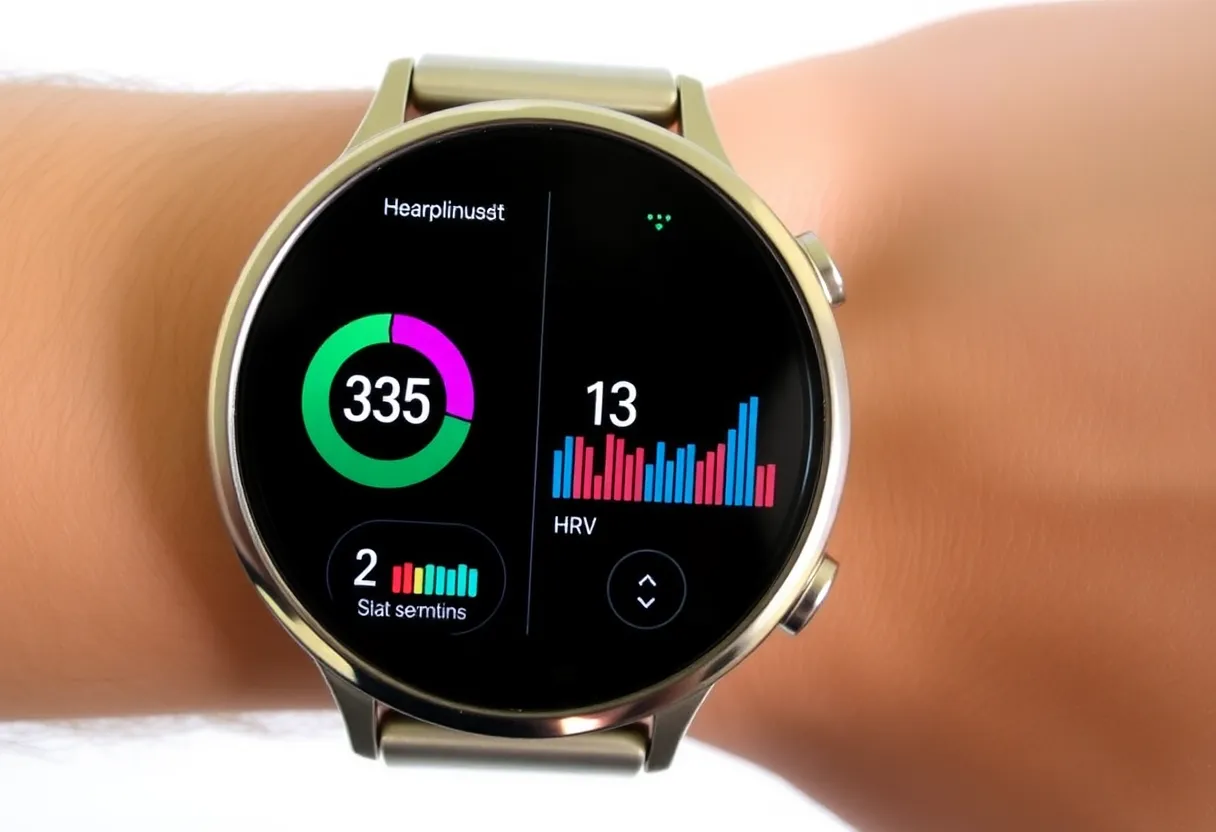
Most wearables estimate “stress” from heart rate variability (HRV)—the tiny variations in the time between heartbeats. The theory is sound: when you’re stressed, your sympathetic nervous system ramps up and HRV tends to drop. When you’re relaxed, the parasympathetic system dominates and HRV tends to rise. The problem is that HRV is influenced by dozens of factors, and the wrist-based sensors in most smartwatches are crude compared to a chest strap or clinical device.
What Your Watch Is Actually Measuring
Wrist-worn optical sensors measure blood flow under the skin. They infer heartbeats from subtle changes in light absorption—photoplethysmography (PPG). The technology has improved a lot, but it’s still sensitive to motion, skin contact, and ambient light. A loose band, a brisk walk, or cold hands can throw off the readings. That variability feeds into any HRV-derived metric, including stress scores.
Even with perfect data, HRV isn’t a direct measure of stress. It’s a proxy. Stress affects HRV, but so do sleep, caffeine, exercise, hydration, time of day, and individual biology. Two people with the same HRV can feel very different. The same person on different days can have similar HRV for different reasons. Your watch doesn’t know if you’re stressed, tired, or just had coffee.
Why the Scores Feel Real
Even when the underlying measurement is rough, the score can feel meaningful. That’s partly because stress affects HRV in predictable ways—so there’s a real signal—and partly because we’re good at confirming our own feelings. If you’re stressed and your watch says you’re stressed, it feels accurate. If you’re stressed and your watch says you’re calm, you might dismiss it or assume the watch is wrong. Confirmation bias does the rest.
Wearables also use proprietary algorithms that often incorporate activity, time of day, and historical baselines. That can improve the signal, but it also means the score is a black box. You don’t know how much weight is on HRV vs. other inputs, or how your baseline was set. The number feels precise, but it’s an estimate built on estimates.
When Stress Scores Might Help
Despite the caveats, stress scores can still be useful. They’re a nudge to pause, breathe, or take a break. For people who ignore their body’s signals, a reminder can help. Some find that tracking over time reveals patterns—e.g., stress spikes after certain meetings or at specific times. That kind of awareness can be valuable even if the absolute numbers are fuzzy.
The danger is treating the score as truth. If your watch says you’re stressed and you’re not, or vice versa, don’t override your own perception for the sake of a metric. Use it as one input among many. Your body knows more than your wrist.
The Science Behind HRV and Stress
Heart rate variability reflects the balance between the sympathetic and parasympathetic branches of your autonomic nervous system. When you’re stressed, the sympathetic (fight-or-flight) system dominates: your heart rate tends to rise and the interval between beats becomes more regular—HRV drops. When you’re relaxed, the parasympathetic (rest-and-digest) system dominates: your heart rate varies more—HRV rises.
The relationship is real and measurable in lab settings. But lab settings use chest straps or ECG, controlled conditions, and multiple measurements. Consumer wearables use wrist optical sensors, real-world conditions, and algorithms tuned for convenience, not precision. The signal is there, but it’s buried in noise.
What Would Make It Better
Better sensors would help—chest straps and dedicated HRV monitors are more accurate than wrist PPG. But the bigger limitation is conceptual: stress is multi-dimensional. A single number can’t capture it. Research labs use questionnaires, cortisol tests, and behavioral measures alongside HRV. Consumer wearables collapse everything into one score. Convenient, but reductive.
Some devices are adding context—e.g., prompting you to log how you feel when a score seems off. That kind of feedback could improve algorithms over time. For now, treat stress scores as a rough guide, not a diagnosis. If your watch suggests you’re stressed, maybe take a breath. If it says you’re fine and you’re not, trust yourself.
Stress Scores vs. Other Wellness Metrics
Stress scores sit alongside heart rate, sleep, and activity in the wellness dashboard. Heart rate is more directly measured—optical sensors are better at counting beats than at the millisecond precision needed for HRV. Sleep is inferred from movement and heart rate; it’s also rough, but people generally recognize when it’s wrong. Stress scores are harder to validate because you don’t have an obvious ground truth. You can’t “feel” your HRV directly.
That makes stress scores easier to sell and harder to trust. The number feels informative precisely because most people can’t independently verify it. If your heart rate says 72 and you feel calm, you might trust it. If your stress score says 75 and you feel stressed, you might trust it too—even though the correlation is weaker and the measurement is noisier.
Bottom Line
Your smartwatch’s stress score is mostly guessing. It’s guessing from noisy data, through proprietary algorithms, at a complex phenomenon that no single number can capture. That doesn’t make it useless—it can prompt useful reflection and behavior change—but it does mean you shouldn’t treat it as gospel. Use it as a prompt, not a verdict. Your body knows more than your wrist.