Why Personal Cloud Storage Beats Both iCloud and Google for Some People

Sam Chen
March 7, 2026
iCloud and Google Drive work for most people. They sync across devices, they’re easy to use, and they’re cheap (or free) for casual use. But for a growing segment—privacy-conscious users, power users with large libraries, families sharing media—personal cloud storage is a better fit. Here’s why.
You Own the Data
With iCloud or Google, your files live on someone else’s servers. The terms of service can change. The provider can scan content, enforce quotas, or shut down features. Your data is only as accessible as their business model allows.
Personal cloud storage—a NAS, a home server, or a self-hosted solution like Nextcloud—keeps your data on hardware you control. No third party is scanning your photos or indexing your documents. Backups are yours. Access control is yours. That matters if you care about privacy or data sovereignty.
No Subscription Ceiling
iCloud and Google charge by the terabyte. At 2TB, you’re paying $10–$15 a month. At 10TB, the math gets worse—or the option disappears entirely. Google discontinued unlimited Drive storage for consumers. Apple caps at 12TB. If you have a large photo library, video projects, or a family archive, you hit limits fast.
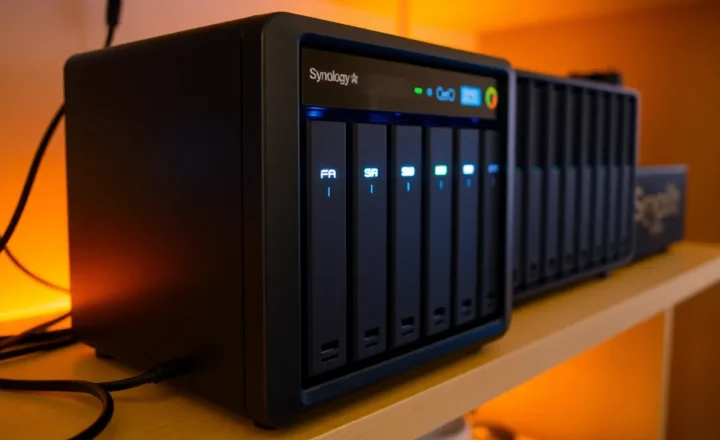
A home NAS or server lets you add drives as you grow. A 4-bay NAS with 4×4TB drives gives you 12TB (or more with redundancy) for a one-time cost. The break-even vs cloud subscriptions is often 2–3 years—and after that, you’re not paying monthly. For heavy users, the economics flip.
Sync That Respects Your Bandwidth
Cloud providers throttle uploads and downloads. Initial sync of a terabyte can take days. Backup of large video files can saturate your connection. And you’re dependent on their availability—when iCloud or Google has an outage, you wait.
Local-first sync—where your data lives at home and syncs to devices—puts your LAN in control. Same-network transfers are fast. Remote access can go through Tailscale, WireGuard, or a VPN. You’re not bottlenecked by a third-party data center.
When It Doesn’t Make Sense
Personal cloud storage isn’t for everyone. It requires setup: choosing hardware, configuring software, maintaining backups. It requires reliability: if your power goes out or your drive fails, you need a plan. It’s not as seamless as “sign in with Apple” and forget.
If you have a few hundred photos and some documents, iCloud or Google is fine. If you’re not technical, the learning curve may not be worth it. But for power users, families with shared media, or anyone who values ownership over convenience, personal cloud storage beats the big providers—often by a lot.
The Privacy Argument
iCloud and Google scan your content—for spam, abuse, and in some cases for features like face recognition and search. That’s convenient, but it means your files are processed by algorithms and potentially by humans in edge cases. For sensitive documents, family photos, or anything you’d rather keep private, that’s a trade-off.
Self-hosted storage doesn’t scan. Your NAS or server runs software you choose. Syncthing, Nextcloud, or a simple SMB share—none of them are sending your data to a third party. If privacy matters, personal cloud wins.
Offline and Redundancy
Cloud providers are highly available, but they’re not infallible. Outages happen. So do account lockouts—Google has locked users out of accounts over policy violations, sometimes with years of data at stake. Personal cloud gives you control over redundancy: RAID, backups to a second drive, offsite backup to a friend’s server or a safe deposit box. You design the strategy.
What “Personal Cloud” Actually Means
Options range from simple to advanced. A Synology or QNAP NAS with built-in apps (Photos, Drive, Notes) gets you 80% of the way with minimal config. Nextcloud on a Raspberry Pi or a small server adds calendar, contacts, and collaboration. Tailscale or WireGuard lets you access it securely from anywhere. The stack is yours to build.
It’s not as plug-and-play as iCloud. But for the right user, the trade-off is worth it. Ownership, privacy, no subscription ceiling—personal cloud storage beats the big providers when those things matter.