What Science Actually Says About Blue Light Glasses and Eye Strain

Dr. Siobhan Reilly
March 1, 2026
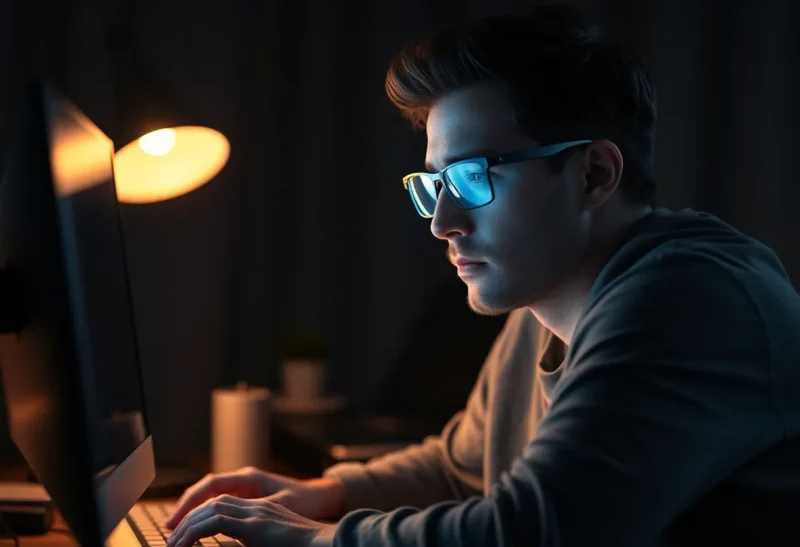
Blue light blocking glasses have become one of the most aggressively marketed wellness products of the last decade. You’ll find them in optician chains, on Amazon with thousands of reviews, and promoted by influencers who insist they changed their sleep and eliminated screen fatigue. The glasses cost anywhere from £10 to £200, and the category generates hundreds of millions in annual revenue.
There’s just one problem: the scientific evidence for their primary marketing claims ranges from weak to nonexistent. That’s not a fringe opinion — it’s the current consensus from controlled clinical trials and systematic reviews. Understanding what the evidence actually shows, and what does help with screen-related eye fatigue, is more useful than spending money on a product built around a theory that doesn’t hold up.
The Blue Light Theory
The premise behind blue light glasses is straightforward: screens emit blue light (wavelengths roughly 400–490nm), blue light causes eye strain and potentially damages the retina, and filtering it out reduces these problems. The sleep angle adds another layer — blue light suppresses melatonin production, so exposure at night disrupts sleep, and blocking it allows normal sleep cycles to resume.
The sleep angle has the most robust support. Bright light of any colour in the evening disrupts circadian rhythms, and blue wavelengths are particularly effective at suppressing melatonin because the photoreceptors that regulate the body clock are most sensitive to that range. Studies have shown that blocking blue light in the hours before bed, or using warmer-toned lighting, can help maintain melatonin levels and improve sleep quality.
Where the theory becomes shaky is in the eye strain and screen fatigue claims — which are, confusingly, the claims most prominently featured on most blue light glasses packaging.
What the Clinical Trials Actually Show
The most comprehensive systematic review of blue light filtering glasses and digital eye strain was published in the Cochrane Database of Systematic Reviews — one of the most rigorous evidence standards in medicine. The 2023 review examined 17 randomised controlled trials involving over 600 participants and concluded that blue light filtering spectacle lenses probably make little to no difference to eye strain symptoms compared to regular lenses.
Several points from the research are worth unpacking:
The amount of blue light from screens is low. Digital screens emit substantially less blue light than natural daylight, which we’re continuously exposed to outdoors without adverse effects. The proportion of high-energy blue light in typical screen output is not considered hazardous at normal viewing distances and durations by ophthalmology bodies including the American Academy of Ophthalmology.
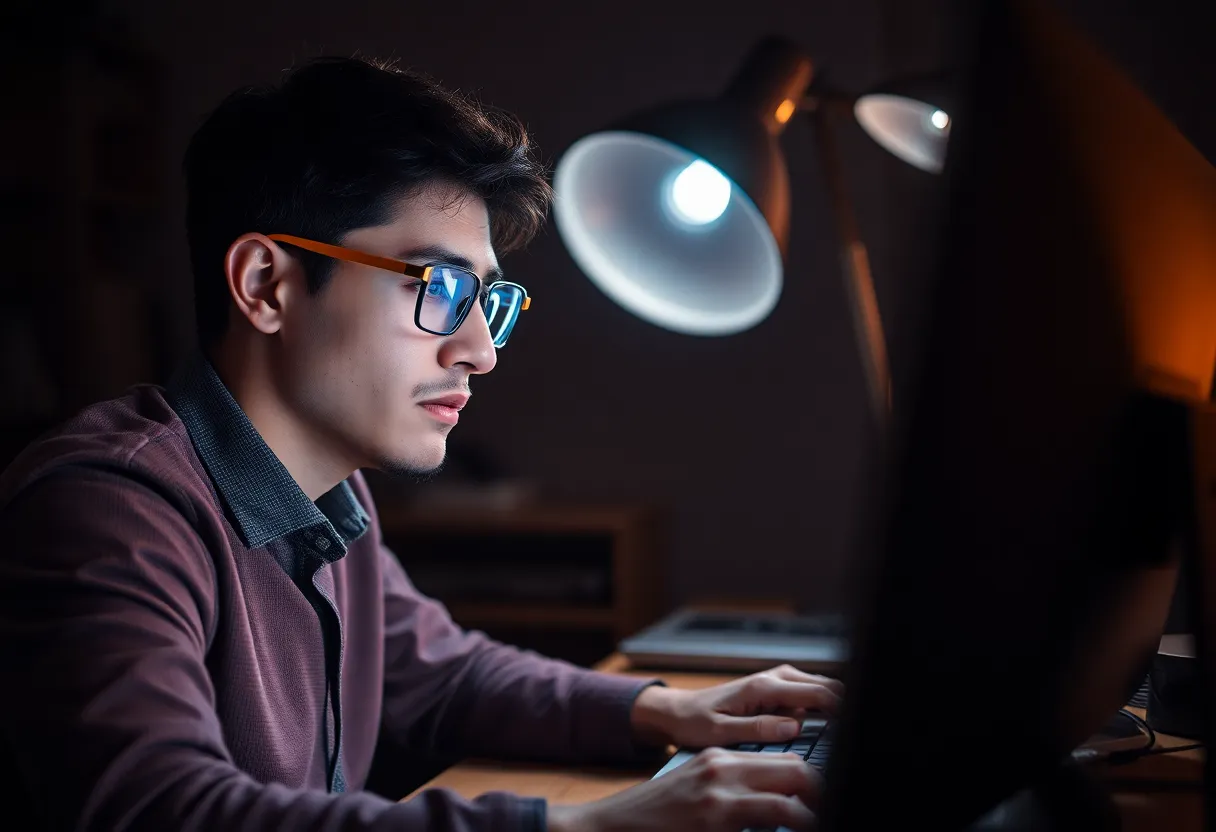
Eye strain from screens is real, but blue light isn’t the cause. Digital eye strain (also called computer vision syndrome) is a genuine and common condition — dry eyes, blurring, headaches, neck discomfort. Clinical evidence points to other causes: reduced blink rate during screen use (normally around 15–17 blinks per minute, dropping to 5–7 when staring at a screen), focusing effort for prolonged near-distance viewing, poor posture, and screen glare. None of these are blue light issues.
Placebo effects are significant. Several studies have found that participants report improved comfort with blue light glasses regardless of whether the lenses actually filter blue light. When researchers used sham blue light glasses (regular lenses marketed as filtering), participants reported similar benefits. This suggests that the expectation of relief, combined with possible improvements in viewing posture from purchasing glasses, drives much of the reported benefit.
The Retinal Damage Claim
A more alarming version of the blue light narrative suggests that screens are permanently damaging your retina. This gets more traction than it deserves.
Blue light at very high intensities — sunlight, welding arcs, industrial lighting — can cause retinal damage (photoretinitis). Laboratory studies have exposed retinal cells to high-intensity blue light and observed cellular damage, which is then cited in marketing material. What the marketing omits is that these studies used light intensities dramatically higher than any screen produces.
The American Academy of Ophthalmology, the Association of Optometrists (UK), and similar bodies have stated that there is no credible evidence that screen blue light causes retinal damage at normal use levels. Ophthalmologists routinely examine the retinas of heavy screen users and don’t observe the pattern of blue light damage the marketing would predict.
There is ongoing research into whether chronic low-level blue light exposure over decades contributes to age-related macular degeneration, but current evidence doesn’t support a causal link at screen-level intensities, and no major ophthalmological body currently recommends blue light glasses for retinal protection based on screen use.
The Sleep Case: Stronger, But Nuanced
The connection between blue light and sleep disruption is better established, but the mechanism and the solution are more nuanced than glasses manufacturers imply.
Evening light exposure — of any brightness — shifts circadian timing. The intrinsically photosensitive retinal ganglion cells (ipRGCs) responsible for circadian signalling are most sensitive to blue wavelengths (around 480nm), so blue-heavy light is particularly disruptive. Studies have found that people using blue light filtering in the 2–3 hours before bed show improved melatonin levels and sleep onset compared to controls.
However, several points complicate the straightforward “buy blue light glasses, sleep better” narrative:
Screen brightness matters more than blue content. A bright screen at any colour temperature is more disruptive than a dim screen. Turning down screen brightness in the evening has a larger effect than filtering blue light at normal brightness.
Night mode works. Most devices now include night shift or night mode features that shift the display to warmer tones after sunset. Research suggests this has a meaningful effect on circadian disruption, and it’s free.
Distance and duration dominate. Short screen exposure in the evening has a smaller effect than prolonged use close to bedtime. Finishing screen use an hour before bed is more effective than filtering while using screens until midnight.
Blue light glasses can form part of an evening light management strategy, but they’re not a substitute for the behavioural interventions that have clearer evidence behind them.
What Actually Helps With Digital Eye Strain
If blue light isn’t the primary cause of screen-related eye fatigue, what is, and what actually works?
The 20-20-20 rule: Every 20 minutes, look at something 20 feet away for 20 seconds. This gives the focusing muscles in your eyes a rest from sustained near-distance work. The evidence for this as a way to reduce eye fatigue is stronger than for blue light filtering. Set a reminder if you need one.
Blink more consciously: Dry eye symptoms during screen use are largely a blink rate problem. Staring at a screen reduces blink frequency by 60–70%, causing the tear film to evaporate before it’s refreshed. Being conscious of blinking, or using artificial tear drops if you work in a dry environment, addresses the actual mechanism.
Correct screen distance and height: Eye strain is often a viewing angle and distance problem. The screen should be roughly arm’s length away, positioned so you’re looking slightly downward at it (not upward). If you’re straining to read small text by leaning forward, increase your text size.
Address glare, not blue light: Glare from windows, overhead lights reflecting on the screen, and excessive contrast between the screen and the surrounding room all contribute to eye fatigue. An anti-glare screen film, adjusted display position, and ambient lighting that matches screen brightness (not a bright screen in a dark room) help more than a blue light filter.
Get an eye test: Significant screen time with an uncorrected or incorrectly corrected refractive error creates sustained focusing strain. Many people who attribute their eye discomfort to blue light are actually overdue for a prescription update.
When Blue Light Glasses Might Be Reasonable
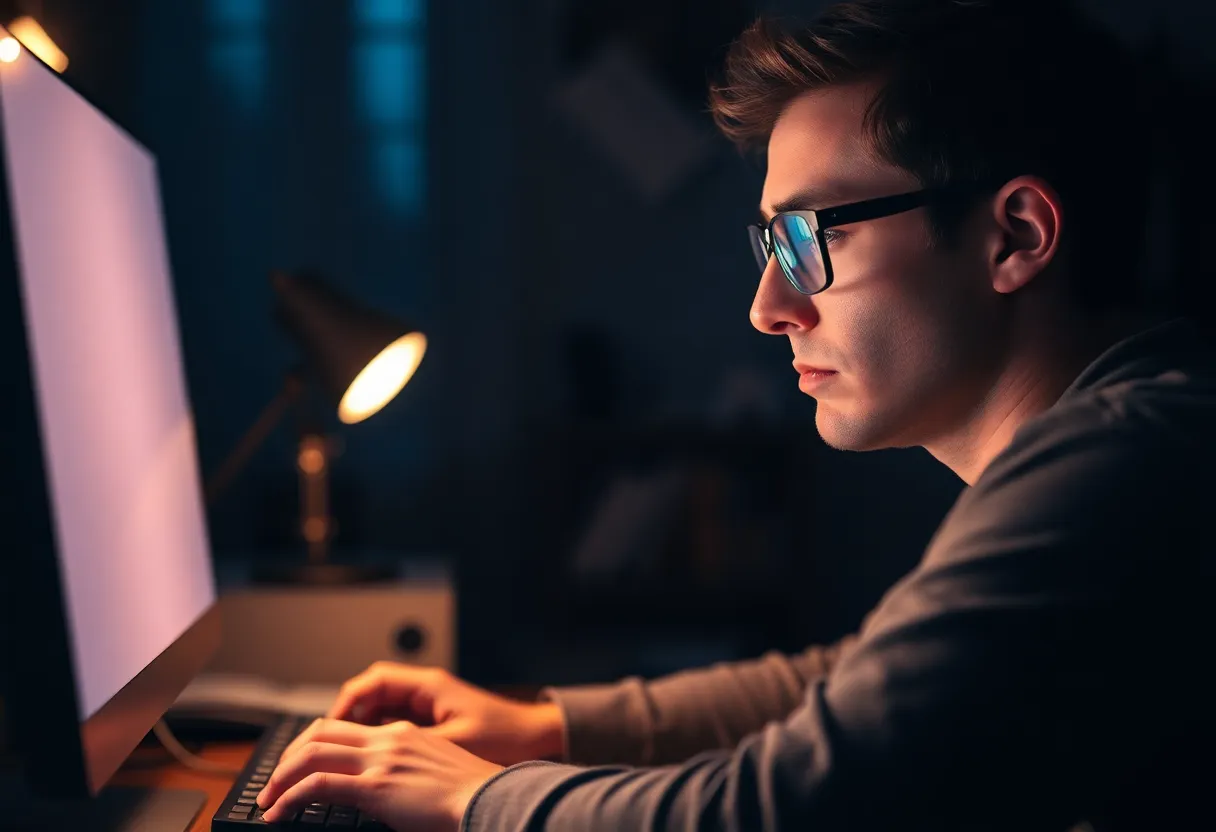
Nuance requires acknowledging that some situations make blue light glasses a reasonable choice, even accounting for the weak evidence on eye strain:
If you find that you subjectively feel better using them — even if this is a placebo effect — and they aren’t expensive, the benefit is real to you. Subjective comfort matters.
If you’re building an evening wind-down routine and want a physical reminder that it’s time to reduce screen stimulation, putting on amber-tinted glasses after 9pm is a reasonable behavioural cue, as long as you understand that brightness reduction and screen time limits are doing more of the work.
If you wear glasses for vision correction and are replacing them anyway, adding a blue light filter coating is a modest cost with a small potential benefit for evening use. It’s not money wasted in that context.
Where they become a waste of money is as a standalone solution to serious sleep problems or significant eye discomfort, where the actual causes are going unaddressed. Buying blue light glasses and continuing to use a very bright screen in a dark room at 11pm while not blinking and sitting too close isn’t a strategy that will work.
The Takeaway
Blue light glasses have better marketing than evidence. The sleep connection has real science behind it, but existing free tools — device night modes, dimming screens in the evening, screen curfews — do the same job. The eye strain claims that drive most sales aren’t well supported by controlled trials, and the actual causes of digital eye strain respond better to posture, distance, blink rate, and glare management than to spectral filtering.
That doesn’t mean everyone wearing them is being fooled. But if you’re considering buying a pair primarily for eye comfort during daytime screen use, the evidence suggests your money would be better spent on a proper eye test, a monitor positioned at the right height, and setting a timer to look away from the screen every 20 minutes.