The Real Engineering Challenges of Mining the Moon

Robin Hayes
March 1, 2026
Lunar mining sounds like science fiction—until you remember that Artemis is targeting the Moon, and that regolith contains water, oxygen, and helium-3. The economics are murky, the technology is immature, and the logistics are brutal. But the engineering challenges are concrete. Understanding them clarifies what “mining the Moon” actually means.
The environment is hostile
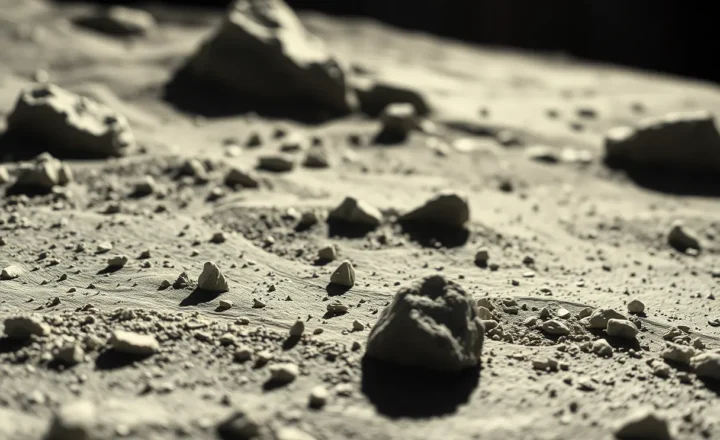
The lunar surface is a vacuum. No atmosphere means no convective cooling—equipment overheats or freezes depending on sunlight. The day-night cycle is 14 Earth days each; temperatures swing from 250°F (121°C) in sunlight to -208°F (-133°C) in shadow. Dust—regolith—is abrasive, electrostatic, and sticks to everything. It clogs mechanisms, degrades seals, and fouls optics. Apollo astronauts found it impossible to keep dust out of suits and equipment. Mining machinery will face the same problem at scale.
Radiation is another factor. Without Earth’s magnetic field and atmosphere, the Moon is exposed to solar wind and cosmic rays. Electronics need hardening. Humans need shielding. Automated equipment is preferable, but robots still need maintenance—and that means humans or sophisticated repair systems.
What we’re actually mining
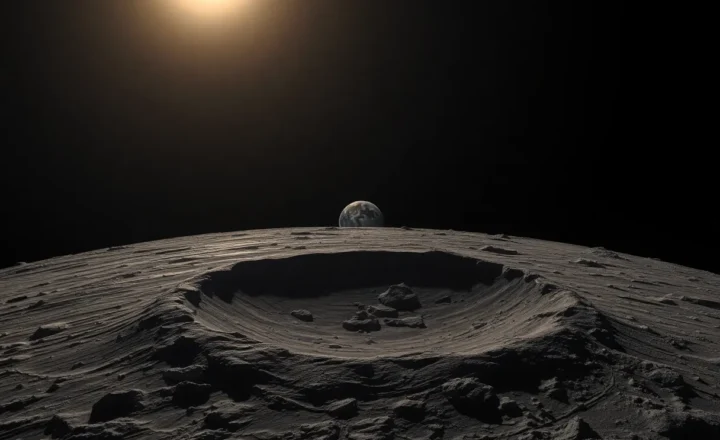
Water ice in permanently shadowed craters is the primary target. Extract water, split it into hydrogen and oxygen, and you have propellant. That enables refueling in space—enormous for Mars missions and beyond. Oxygen also supports life support. Water is the key resource.
Helium-3, embedded in regolith, has been touted for fusion energy. The Moon has far more than Earth. But fusion using helium-3 is still speculative—no commercial reactor exists. The economics are decades away, if ever. Regolith itself can be processed for oxygen, metals, and construction materials. In-situ resource utilization (ISRU) reduces the mass you have to launch from Earth. The less you bring, the cheaper the mission.
Extraction and processing
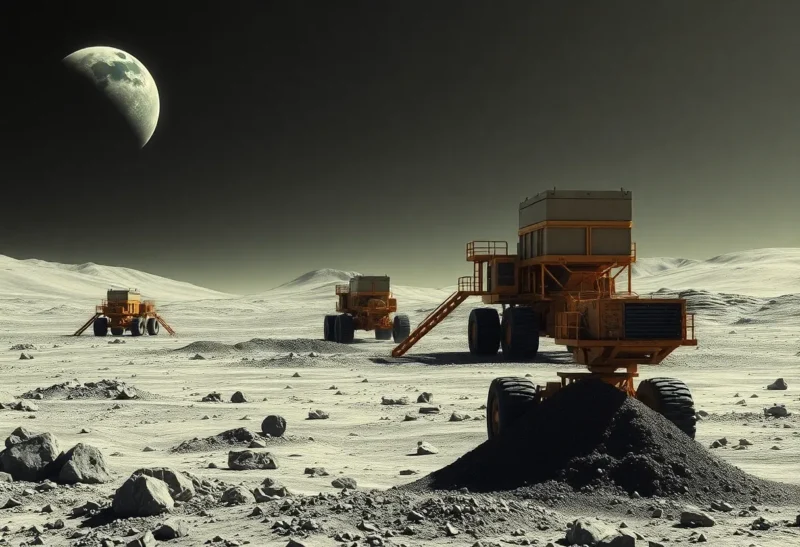
Mining regolith is conceptually simple: dig, collect, process. The difficulty is doing it remotely, in a vacuum, with extreme temperatures and dust. Excavators, rovers, and conveyors designed for Earth don’t translate directly. Lubricants evaporate in vacuum. Seals fail. Dust invades. NASA and commercial teams are developing regolith-handling systems—crushers, heaters, electrolysis—but nothing has operated at scale on the Moon yet.
Processing regolith to extract water or oxygen requires heat and chemistry. Microwave heating, hydrogen reduction, and molten salt electrolysis are all under study. Each has trade-offs: energy use, complexity, yield. Which approach scales best is an open question. Pilot plants on Earth can simulate some conditions, but only the Moon will tell.
Energy and infrastructure
Mining and processing are energy-intensive. Solar works during the lunar day—two weeks of continuous light near the poles—but you need storage or nuclear for the night. Nuclear reactors for space are being developed; NASA’s Kilopower project demonstrated a small fission system. Solar-plus-batteries could work for small-scale operations, but scaling up demands a reliable power source. Energy availability constrains everything else.
Infrastructure is sparse. There are no roads, no ports, no electrical grid. Everything must be landed, assembled, and maintained. Communication delays to Earth are short—about 1.3 seconds—so teleoperation is possible, but latency still limits real-time control. Autonomy will be essential. The first mining operations will be small, proof-of-concept efforts. Scaling to commercial levels is a long way off.
The path forward
NASA’s Commercial Lunar Payload Services (CLPS) program is sending payloads to the Moon. Companies like Intuitive Machines, Astrobotic, and others are developing landers and rovers. Early missions will test regolith handling, drilling, and sample return. Each mission reduces uncertainty and de-risks the next.
The real engineering challenges aren’t theoretical—they’re practical. Dust mitigation. Thermal management. Reliable extraction and processing. Power. Autonomy. Logistics. Solving them will take years of iteration, failure, and iteration again. Lunar mining isn’t impossible. It’s just harder than the headlines suggest—and the engineers working on it know that better than anyone.