Why OTA Updates in Your Car Feel Riskier Than Your Phone

Sofia Reyes
March 1, 2026
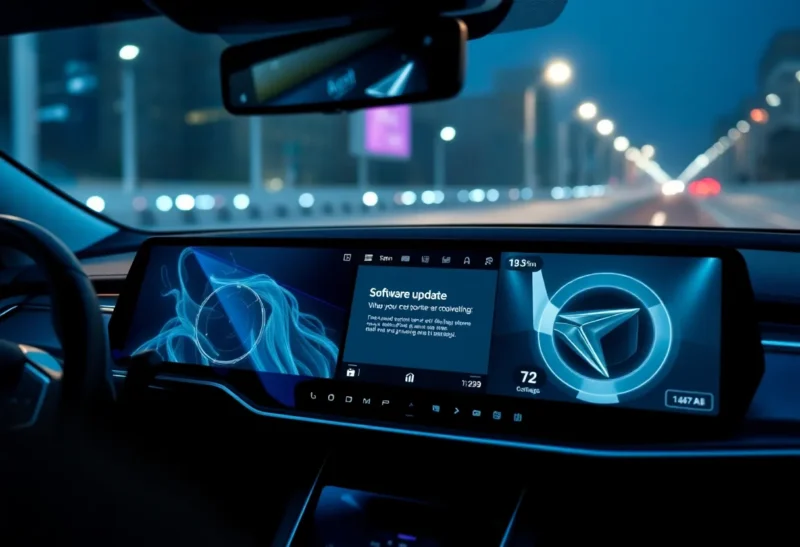
When your phone prompts you to update, you tap “Install” and move on. When your car does the same, something feels different. That hesitation isn’t irrational—it’s the product of decades of how we’ve learned to think about vehicles versus devices. Over-the-air (OTA) updates have transformed the automotive industry, but they’ve also introduced a new kind of anxiety that smartphone updates never quite managed.
The psychology of trust
We’ve spent most of our lives treating cars as physical objects. You buy one, you maintain it, you drive it until it wears out. Software was something that lived inside computers and phones—things that could be replaced easily if they broke. Cars were different. A car that wouldn’t start was a serious problem. A phone that froze could be reset or swapped.
That mental model is still with us. When a smartphone update goes wrong, the stakes feel low. At worst, you restore from backup or get a new device. When a car update goes wrong, the stakes feel life-threatening. Will it start? Will the brakes work? Will the steering respond? We haven’t had decades to build the same casual relationship with car software that we have with phone software.
What’s actually different
The technical reality is more nuanced. Modern vehicles run multiple electronic control units (ECUs) managing everything from infotainment to powertrain to safety systems. OTA updates typically target non-critical systems first—infotainment, navigation, driver-assist features. Critical systems like brakes and steering are usually updated differently, often requiring a dealer visit.
But that distinction isn’t always clear to owners. When Tesla pushed an update that temporarily removed some Autopilot features in 2021, or when other manufacturers have rolled back updates due to bugs, it reinforced the idea that car software is fragile. Phone updates go wrong too, but we’ve normalized those failures. Car update failures still make headlines.
The stakes are genuinely higher
Here’s the uncomfortable truth: the stakes are higher for cars. A buggy phone update might brick your device or drain your battery. A buggy car update could, in theory, affect systems that keep you safe. The industry has built safeguards—redundancy, rollback mechanisms, staged rollouts—but the possibility space is larger. A car has more attack surface, more failure modes, and more consequential failures.
Regulators are paying attention. The NHTSA has investigated OTA-related issues. Europe’s cybersecurity regulations for vehicles are tightening. The industry is learning that “move fast and break things” doesn’t translate well to two-ton machines traveling at highway speeds.
Why phone updates feel safer
Phones benefit from ubiquity and turnover. Billions of people have smartphones. Updates are tested across an enormous variety of devices and configurations. When something goes wrong, the impact is distributed across millions of users who can share solutions, and replacement devices are readily available. The ecosystem has matured.
Cars are different. Fewer units, longer lifespans, more variation in hardware and software configurations. An update that works on a 2024 model might behave differently on a 2022 model with slightly different ECU firmware. The testing matrix is enormous, and the consequences of failure are more severe.
What would help
Transparency would go a long way. When an update is available, owners should know exactly what it touches. “Infotainment and navigation” feels very different from “powertrain and safety systems.” Some manufacturers already do this well; others bury the details in release notes nobody reads.
Rollback options matter. If an update causes problems, the ability to revert to the previous version should be straightforward. Not all manufacturers offer this, and when they do, it’s not always obvious how to use it.
Finally, the industry needs to earn trust over time. Phone updates used to feel risky too. We learned to accept them through repeated exposure and relatively low-stakes failures. Car OTA updates are newer. Building the same comfort level will take years of reliable updates and transparent communication when things go wrong.
The path forward
OTA updates are here to stay. They enable faster security patches, feature improvements, and bug fixes without requiring a dealership visit. The benefits are real. But the transition from “car as appliance” to “car as updatable platform” is still incomplete. Our instincts are lagging behind the technology—and in this case, that caution might be healthy. The day we tap “Install” on a car update as casually as we do on a phone will be the day the industry has proven it deserves that trust. We’re not there yet.