Why Noise-Canceling Headphones Change How You Work

Owen Finch
February 25, 2026
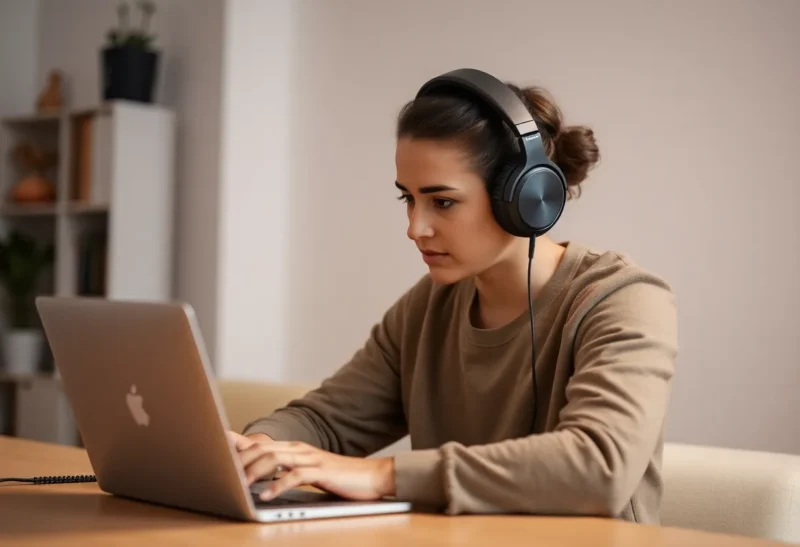
Noise-canceling headphones aren’t just for flights anymore. For anyone working in open offices, cafés, or at home with roommates or street noise, they’ve become a productivity tool. The difference isn’t only volume—it’s how your brain allocates attention when the background hum disappears. Here’s why they change how you work, and what to expect from the current crop of cans.
Quiet Isn’t Just About Volume
Your brain constantly filters ambient sound. Air conditioning, traffic, conversations in the next room—they all consume a little cognitive load even when you’re “ignoring” them. Active noise cancellation (ANC) removes or sharply reduces that input before it reaches you. The result isn’t just “less loud.” It’s fewer competing signals. You’re not straining to focus; the environment has stopped competing. For deep work—coding, writing, analysis—that can mean the difference between needing three hours to get into flow and getting there in twenty minutes.
That’s why people report feeling less fatigued after a day of wearing ANC headphones. The brain isn’t working as hard to gate out noise. You’re not consciously “tuning out”; the tuning out is done at the hardware level. The effect is subtle but cumulative over a workday.
When ANC Helps Most
ANC is best at steady, low-frequency noise: HVAC, engine rumble, the drone of an open office. It’s less effective at sudden or high-frequency sounds—keyboard clatter, a door slam, someone talking right next to you. So it won’t make a busy café completely silent, but it can take the edge off enough that you can focus. For hybrid work, that often means you can work from more places without feeling like you’re fighting the environment.
Transparency or “aware” modes flip the script: they pipe in outside sound so you can hear announcements or have a quick conversation without taking the headphones off. That’s useful when you need to stay aware of your surroundings—walking, in an office where people might need you—while still having the option to switch back to full cancellation when you need to focus.
Battery and Comfort
Modern ANC headphones typically run 20–40 hours on a charge with ANC on. So you’re not constantly recharging. Comfort matters as much as sound: if you’re wearing them for most of the workday, weight and clamp force become real. Over-ear models usually distribute weight better than on-ear; the trade-off is bulk and portability. For desk work, over-ear ANC has become the default for a reason: you forget they’re on.
The Bottom Line
Noise-canceling headphones change how you work by removing the cognitive tax of background noise. They’re not magic—they won’t fix a chaotic schedule or a bad workflow—but they create a controllable acoustic environment wherever you are. For focus-heavy work, that’s often enough to make a real difference.